Disinfecting Condo and HOA Common Areas: Where It Matters and How Often
A guide for HOA boards and property managers: which common area surfaces to disinfect, when to schedule it, and how it fits with regular cleaning.
Perfectly Clean4 min read
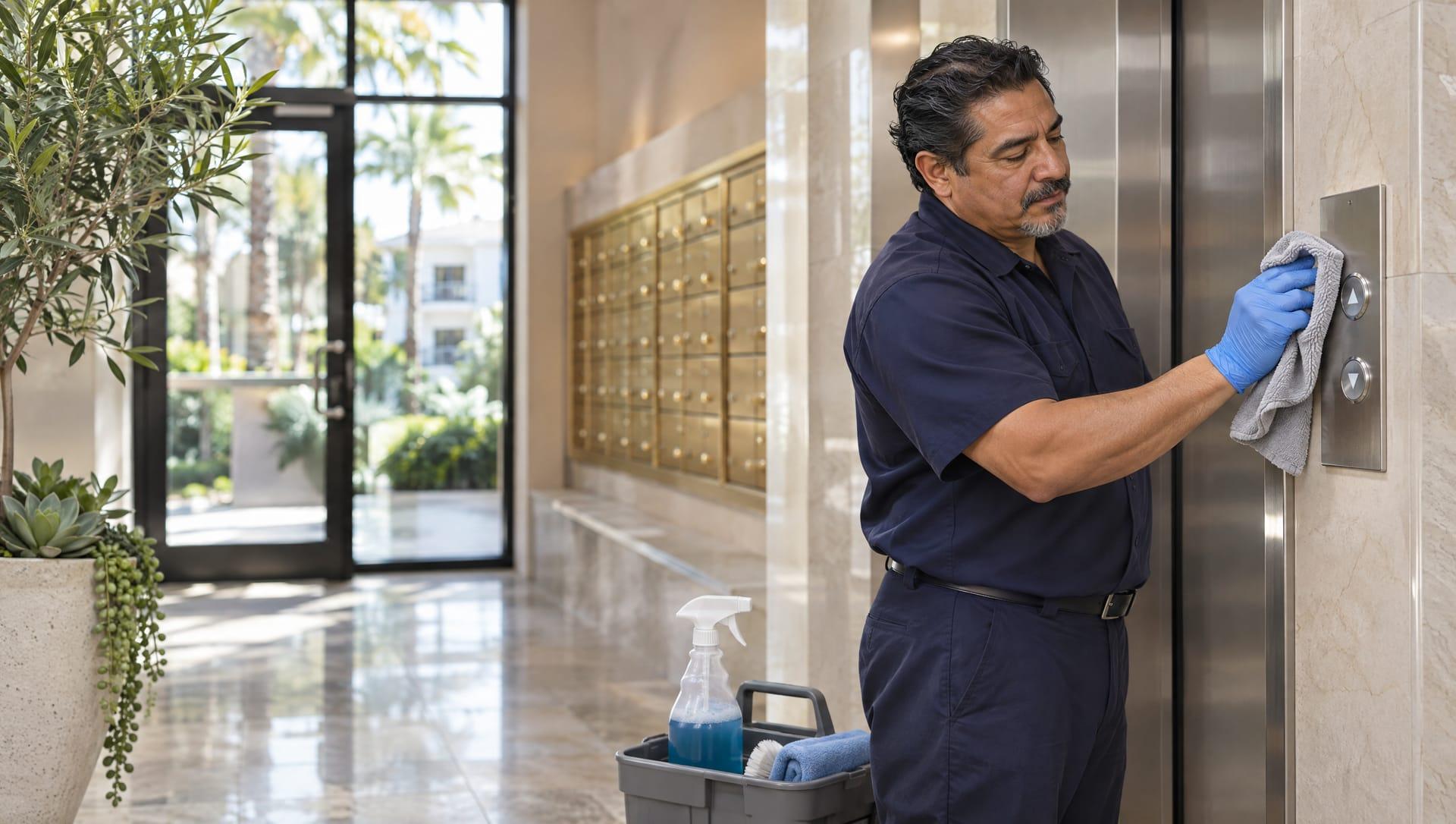
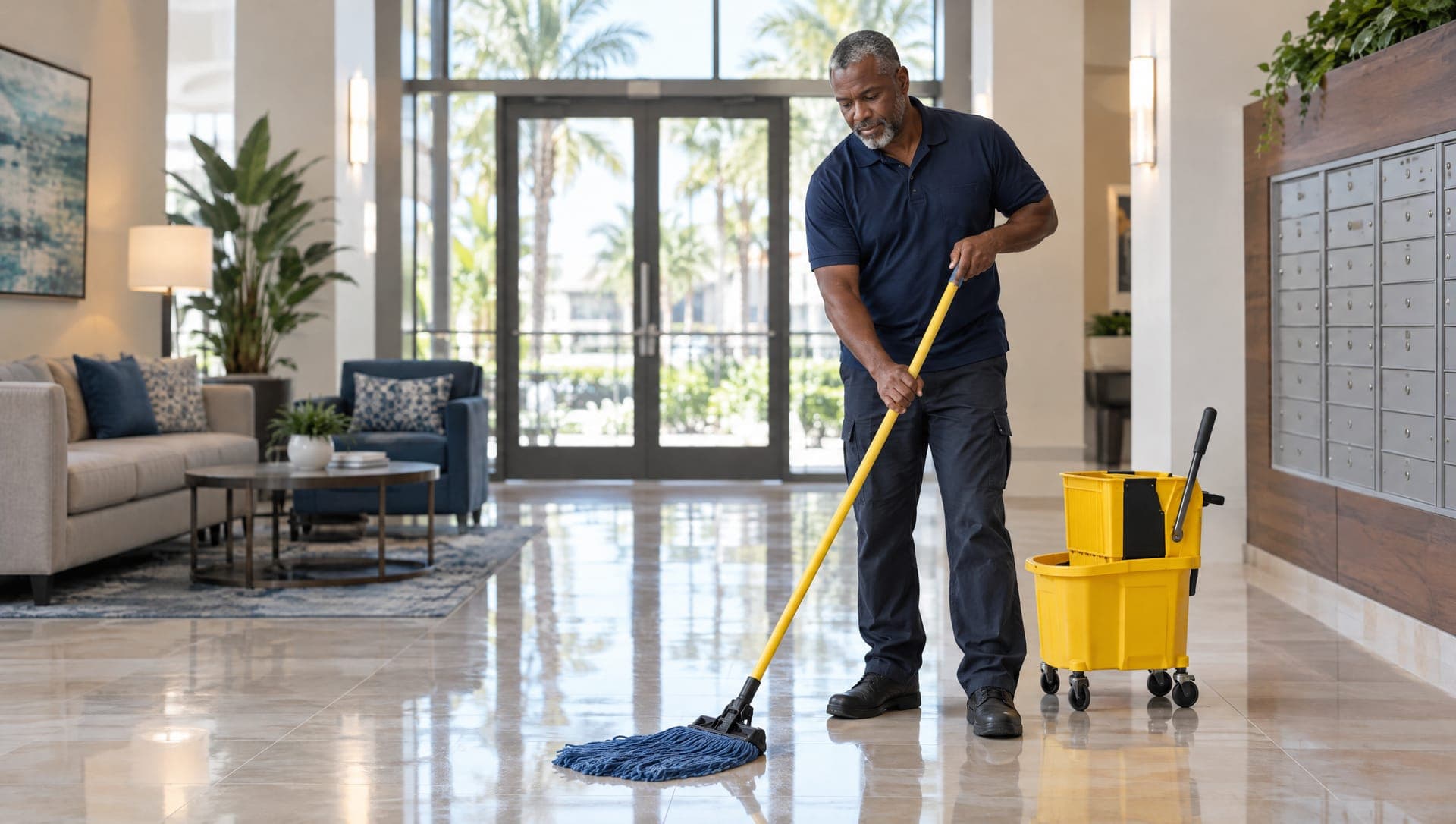
In a condo building or an apartment community, the same handful of surfaces get touched by everyone: the entry door, the elevator buttons, the mailboxes. A lobby can look spotless and still carry germs from one resident's hand to the next.
That is the job disinfection does, and it is a different job from cleaning. Boards and property managers get the most from it when they know where it matters, how often to schedule it, and what it will not do.
Cleaning and Disinfecting Are Two Jobs
Cleaning removes dust, grime and residue. Disinfecting targets germs on a surface that is already clean.
The order matters. Disinfectant works poorly on a dirty surface, so a crew that sprays without cleaning first is skipping the step that makes the second one work. The right sequence is always the same: clean, disinfect the high-touch zones, then keep it consistent.
The Touchpoints That Matter Most
Walk the route a resident takes from the street to their front door and note everything a hand lands on. In most communities that list includes:
- Entry door handles, push bars and gate keypads
- Elevator call buttons, cab buttons and handrails
- Stairwell railings
- Mailboxes and package room doors
- Common restroom touchpoints: faucets, flush handles, door latches
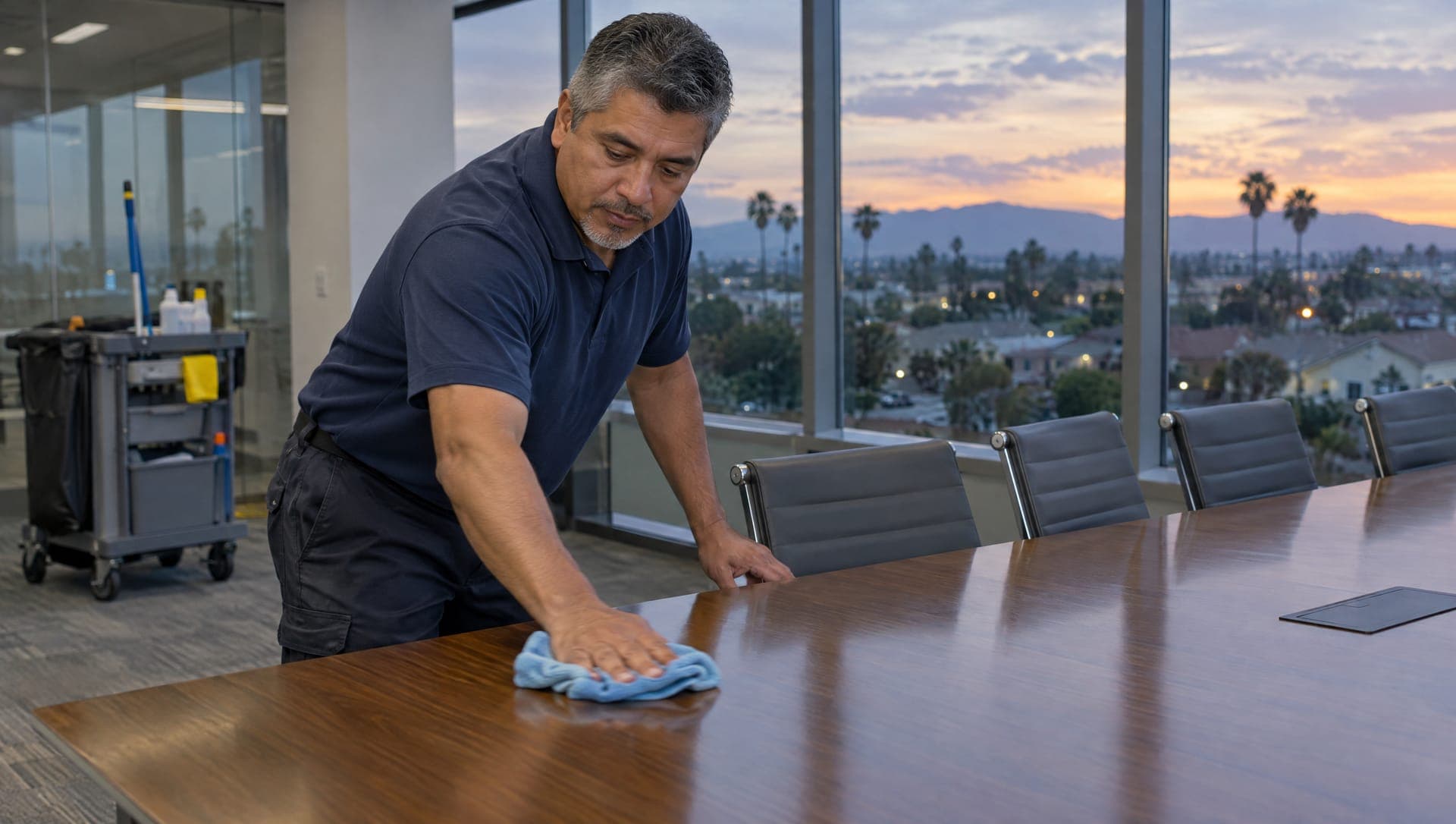
- Clubhouse and recreation room tables, chairs and shared equipment
- Trash room doors and chute handles
These are the surfaces to name in the agreement. Floors and walls need cleaning, but they are not where hands go.
How Often: Match It to Traffic
There is no single schedule that fits every property. A 200-unit building with one elevator bank puts far more hands on the same buttons than a small townhome community with open walkways.
A practical way to decide:
- Every recurring visit: wipe the highest-traffic touchpoints as part of the regular scope, the same way floors and bins are part of it.
- On a set schedule: add a fuller disinfection treatment of the shared rooms and touchpoints at an interval the board agrees on, more often for busier buildings.
- When something calls for it: book a one-time treatment, described below.
Write the frequency next to each area rather than one line for the whole property. It keeps the scope clear and the invoice predictable.
When to Schedule an Extra Treatment
A one-time disinfection visit is worth considering when:
- Illness is going around the building
- A community event or a high-traffic week is coming up
- The board wants a higher standard for shared spaces during cold and flu season
- You manage several properties and want the same standard across all of them
Where Electrostatic Disinfection Fits
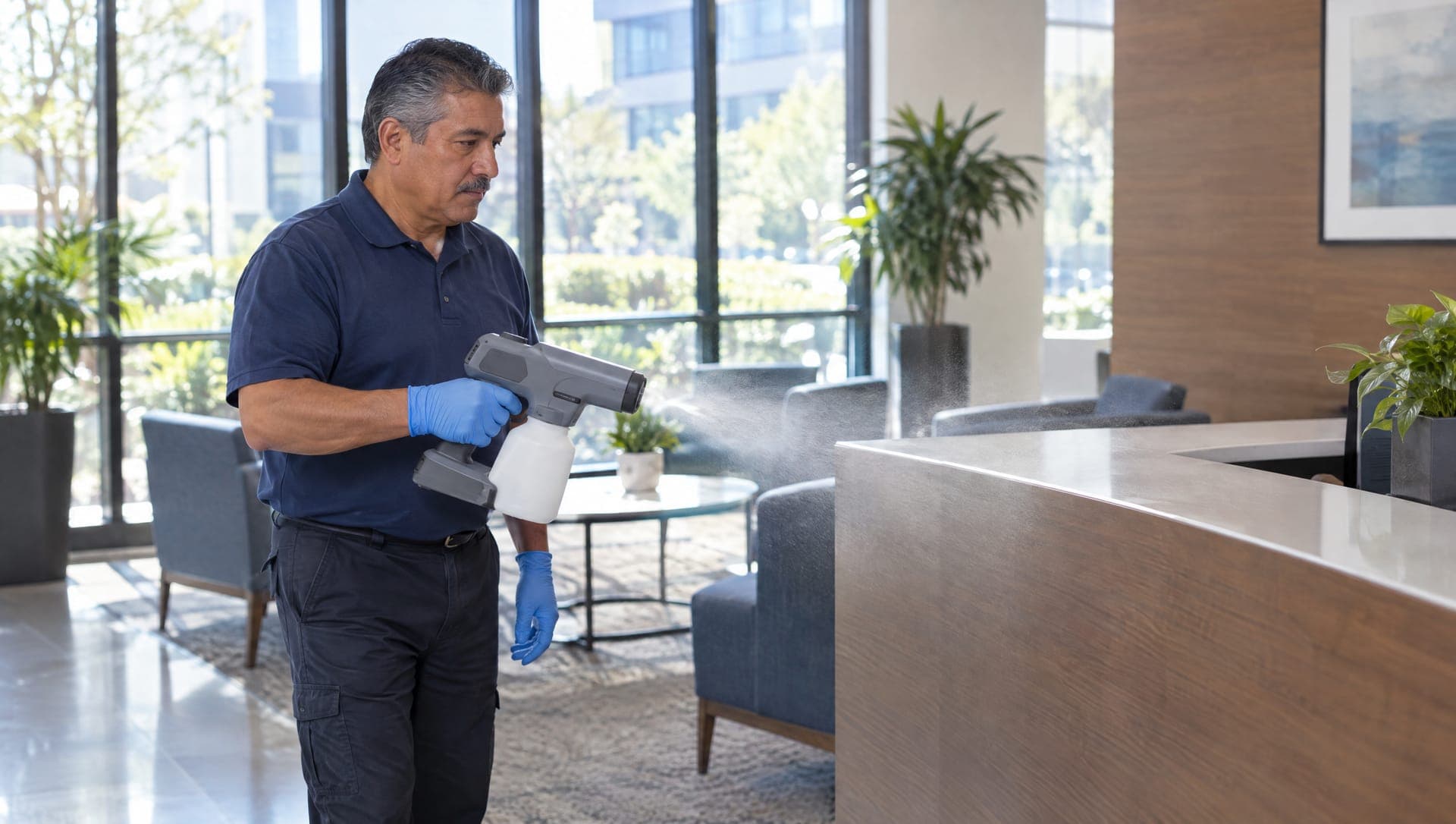
Electrostatic sprayers apply disinfectant more evenly than a wipe-down, including the angles and edges that are easy to miss: the underside of a handrail, the sides of a push bar, the gaps around elevator buttons.
That makes it a good fit for common areas, where the touchpoints are small, oddly shaped and spread across the whole building. It is a way to improve coverage, not a "magic fog."
What It Will Not Do
Disinfection is not a substitute for cleaning. Do not expect it to:
- Remove buildup, stains or odors
- Make up for a missed cleaning visit
- Replace a deep clean of a neglected trash room or restroom
If a space is cluttered or dirty, clean first.
Questions to Ask a Cleaning Company
Before adding disinfection to a common area agreement, ask:
- Which surfaces are treated, by name?
- Are surfaces cleaned before they are disinfected?
- When is the work done, so residents are not walking through it?
- Is it part of the recurring scope, a scheduled add-on, or a one-time visit?
- Is it written into the proposal, with its own price?
How We Handle It
At Perfectly Clean, surfaces are cleaned first, then the high-touch zones are treated with an electrostatic sprayer. Most clients add it to an existing recurring schedule; it is also available as a one-time visit. We coordinate the time around a property's operating hours, and the scope, frequency and price are set out in a written proposal.
The Bottom Line
Common area disinfection works when it is specific: named surfaces, a frequency that matches the traffic, and regular cleaning underneath it. Done that way, it is a small addition to the scope that residents notice most when it is missing.
Serving apartment communities, condos and HOAs across Ventura County & San Fernando Valley. See our common area maintenance and electrostatic disinfection services, or get a free quote for your property.